
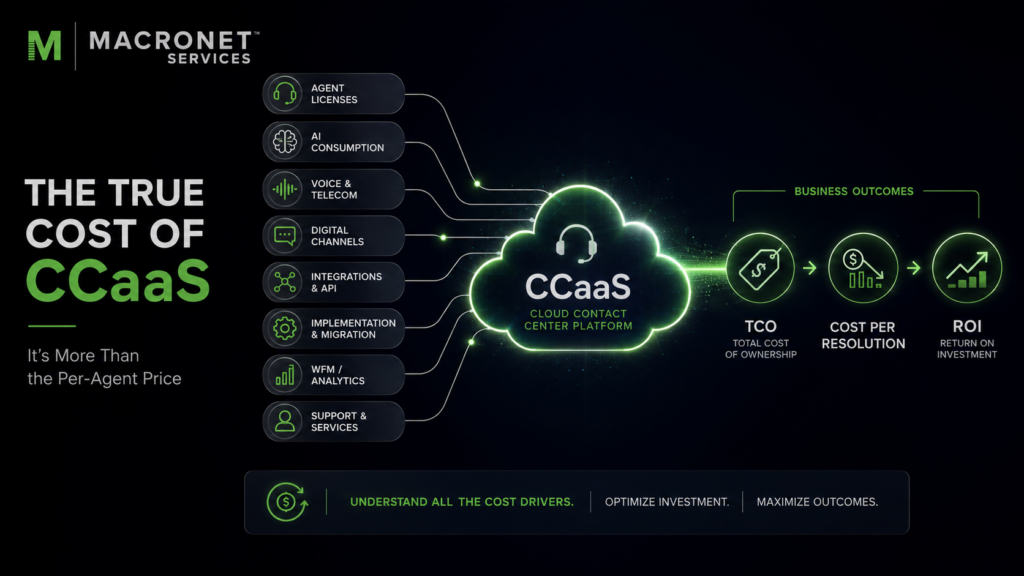
CCaaS Pricing 2026: Costs, AI Fees, Hidden Charges & ROI
CCaaS pricing in 2026 is more complex than a simple per-agent fee. This guide explains licensing models, AI charges, telecom costs, implementation expenses, hidden fees, total cost of ownership, and ROI so enterprises can compare providers, benchmark quotes, and make better contact center buying decisions.
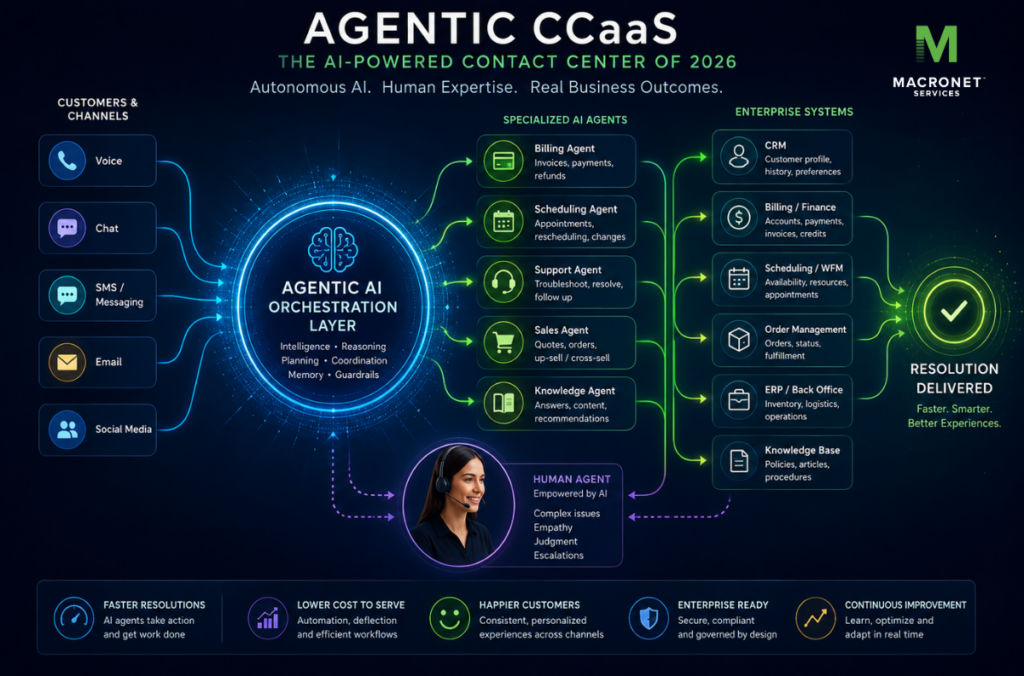
Agentic CCaaS: 2026 Guide to AI Contact Centers
Agentic CCaaS is transforming contact centers from systems that route customer interactions into AI-powered platforms capable of resolving customer needs and executing work across enterprise systems. This 2026 guide explains the technology, business case, governance, voice AI, multi-agent orchestration and leading platforms including NICE, Genesys, Talkdesk, Five9, Zoom, Dialpad, Avaya, Vonage and 8×8.

Enterprise Fiber Buildout: How to Get Fiber to an Off-Net Building
Learn how to build a compelling fiber buildout business case for an off-net building. This guide explains fiber build costs, route economics, carrier investment criteria, construction charges, and escalation strategies that can help enterprises improve the chances of getting fiber approved.

IoT Solutions for Business: Complete 2026 Guide
Business IoT is evolving from connected devices and dashboards into an operational intelligence layer for AI. This definitive guide explains the use cases, architecture, connectivity, security, implementation process, costs and ROI of enterprise IoT solutions.
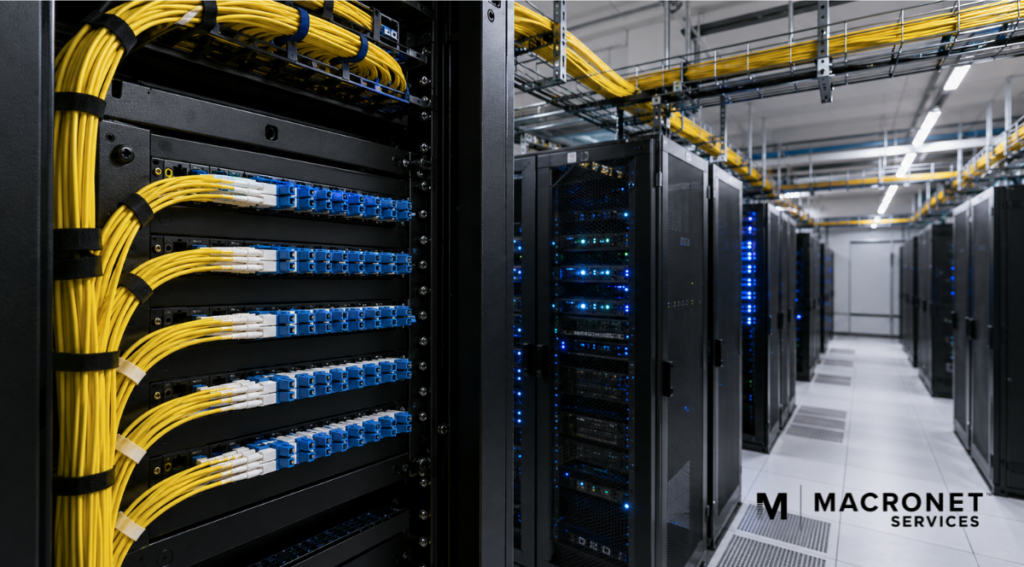
Data Center Cross Connects: Enterprise Guide
Data center cross connects are the physical Layer 1 connections that make colocation, cloud on-ramps, carrier access, and low-latency enterprise networking possible. This guide explains how they work, how to order them, and how to avoid common technical and financial mistakes.

Meter vs. Nile: Enterprise Network as a Service Comparison
Compare Meter vs. Nile in this comprehensive enterprise Network as a Service guide. Explore their differences in architecture, security, WAN capabilities, pricing, deployment, service responsibilities, and ideal use cases to determine which managed NaaS model best fits your organization.

Greenfield Telecom Provisioning: The CIO’s Address Validation Guide
Greenfield telecom provisioning can delay new facility launches when carriers cannot validate a new address, quote fiber, or identify a demarcation point. This guide explains how CIOs can use address assignment letters, KMZ/KML files, MPOE planning, OSP engineering, and Special Construction Charge negotiations to get fiber backhaul, DIA, dark fiber, and SD-WAN underlay services ready before opening day.
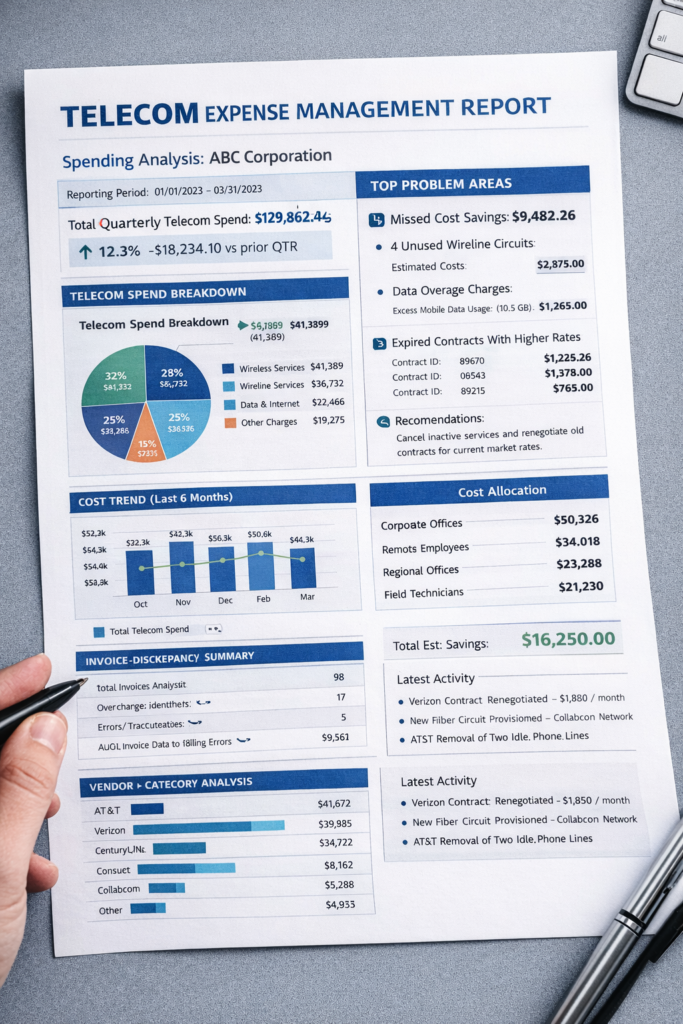
What Is Telecom Expense Management (TEM)? A Guide to Controlling Enterprise Telecom Costs in 2026
Enterprises evaluating Equinix in 2026 have more—and often better—options. This in-depth guide compares leading Equinix competitors including Digital Realty, Megaport, AI-first data center providers, and regional specialists. Learn when Equinix still wins, where alternatives outperform, and how CIOs can design a hybrid infrastructure strategy optimized for AI, cloud, cost, and scalability.

Adaptive Network Control in Network as a Service (NaaS): The Architecture of the AI-Ready WAN in 2026
Adaptive Network Control and Network as a Service (NaaS) are transforming the modern WAN into an autonomous, AI-ready network. This in-depth guide explains how real-time optimization, elastic bandwidth, cost-aware routing, and Tier 1 ISP integration enable enterprises to scale AI workloads securely and efficiently. Discover how Macronet Services designs Adaptive NaaS architectures for global performance and resilience.

Telecom Expense Management (TEM): The Definitive Guide for Mid-Large Enterprises
Telecom Expense Management (TEM) has quietly become one of the largest unmanaged operating expense categories in mid-large enterprises. As organizations adopt cloud, UCaaS, CCaaS, mobility, and AI-driven workloads, telecom costs have fragmented across contracts, subscriptions, and usage-based services—often without clear ownership or financial controls.
This definitive guide explains what modern Telecom Expense Management really is, what it includes today, and why traditional approaches no longer work. Written for CIOs, CFOs, IT, finance, and procurement leaders, it provides a comprehensive framework for reducing waste, improving governance, planning network transformations, and restoring visibility to enterprise connectivity spend.
Rather than treating TEM as a bill-pay or audit function, this guide shows how leading organizations use it as a strategic discipline—one that enables cost control, supports digital transformation, and aligns financial and network decisions across the enterprise.