

IP Transit vs. Dedicated Internet Access (DIA): What’s the Difference?
IP Transit vs. Dedicated Internet Access (DIA): What’s the Difference? This comprehensive enterprise guide explains how IP transit and DIA compare in network architecture, BGP routing, performance, costs, redundancy, and operational responsibilities. Discover when managed Dedicated Internet Access is the better choice, when IP transit offers greater routing flexibility, and how to evaluate Tier 1 ISPs, multihoming, and cloud connectivity. Learn how Macronet Services helps enterprises design resilient networks, compare providers, and optimize Internet connectivity costs.

Dual ISP Redundancy: How to Design Truly Diverse Internet Connectivity
Dual ISP Redundancy: How to Design Truly Diverse Internet Connectivity explores why purchasing two Internet connections does not necessarily guarantee network resilience. Learn how to evaluate physical fiber route diversity, last-mile infrastructure, carrier independence, and shared failure risks. This comprehensive enterprise guide explains how to verify truly diverse Internet circuits, design reliable failover architectures, evaluate cloud connectivity, and source redundant ISP services that support business continuity. Discover how Macronet Services helps organizations design and procure resilient, cost-effective Internet connectivity.

BGP Routing Explained: The Enterprise Guide to Internet Routing
BGP Routing Explained: The Enterprise Guide to Internet Routing explores how Border Gateway Protocol powers global Internet connectivity and enterprise networks. Learn how BGP works, how routers select the best paths, and how organizations use BGP multihoming, traffic engineering, and redundant ISPs to improve network resilience. This comprehensive guide also covers eBGP vs. iBGP, BGP security, RPKI, route hijacking, cloud connectivity, and best practices for designing reliable enterprise Internet architectures.

How to Read and Compare a Data Center Colocation Quote
How to Read and Compare a Data Center Colocation Quote: learn how to evaluate power pricing, MRC, NRC, PUE, cross connects, escalators, TCO, and contract risks. This guide explains how to normalize competing colocation proposals, uncover unmodeled costs, compare power and connectivity structures, calculate total contract value, and identify the provider offering the best risk-adjusted economics.
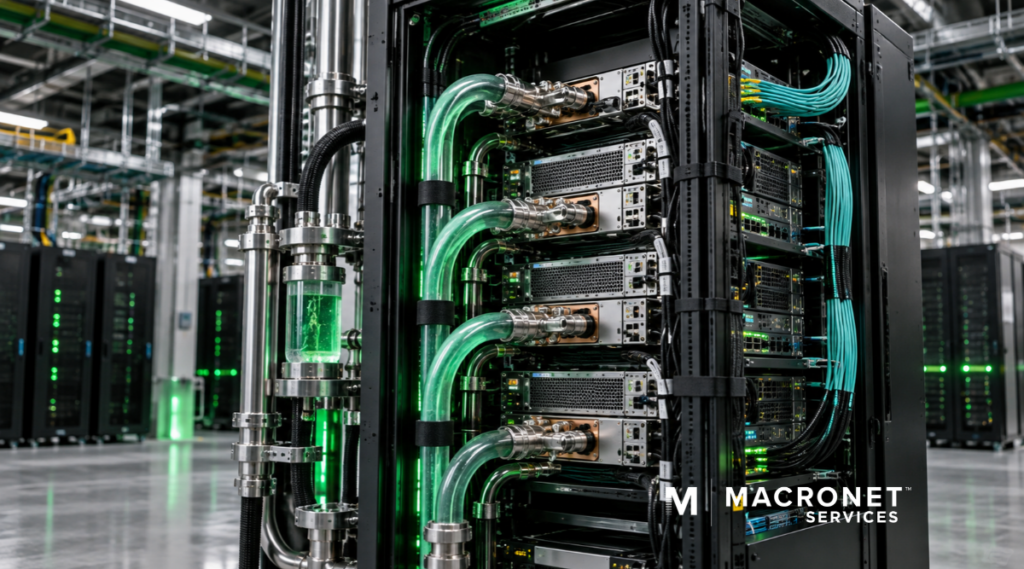
AI Colocation: How to Choose a Data Center for GPU and High-Density AI Infrastructure
AI Colocation: How to Choose a Data Center for GPU and High-Density AI Infrastructure. Learn how to evaluate power, liquid cooling, networking, scalability, resiliency and cost when selecting a facility for enterprise AI workloads. This guide explains the technical and commercial requirements behind GPU colocation, from rack density and high-speed networking to commissioning, expansion planning, and long-term infrastructure strategy.

Data Center Migration Guide: Moving Enterprise Infrastructure to Colocation
This Data Center Migration Guide explains how to move enterprise infrastructure to colocation with less risk, including discovery, dependency mapping, migration waves, network cutover, data replication, rollback planning, physical relocation, validation, decommissioning, and post-migration optimization.
Data Center Colocation Pricing: The Complete Enterprise Cost Guide for 2027
Data Center Colocation Pricing: The Complete Enterprise Cost Guide for 2027 explains how enterprises should evaluate colocation costs across major U.S. markets, including power, connectivity, cross connects, AI density, contract terms, and total cost of ownership. Use this guide to compare pricing models, understand market differences, and make better data center sourcing decisions.
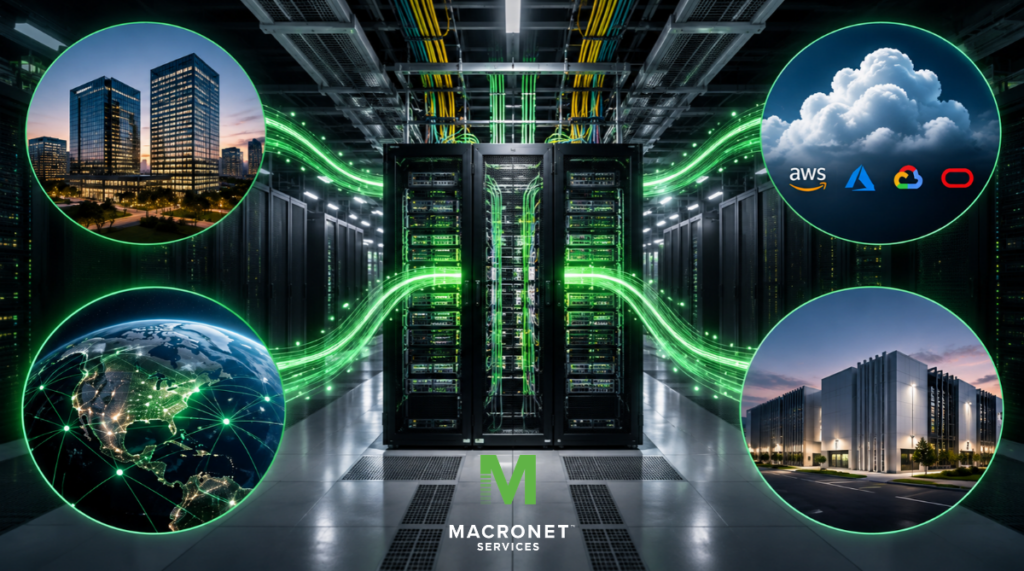
Data Center Connectivity: Carriers, Cloud On-Ramps, Cross Connects & Internet Access
Data Center Connectivity: Carriers, Cloud On-Ramps, Cross Connects & Internet Access examines how enterprises connect colocation environments to carriers, Tier 1 Internet providers, public clouds, other data centers and business-critical applications. Learn how to evaluate cross connects, cloud on-ramps, network diversity, resiliency, performance and total connectivity cost.

Multi-Cloud Networking: The Complete Enterprise Guide
Multi-Cloud Networking: The Complete Enterprise Guide explains how enterprises can connect AWS, Azure, OCI, Google Cloud, data centers and WAN environments while improving resiliency, routing, security, performance and cost efficiency.
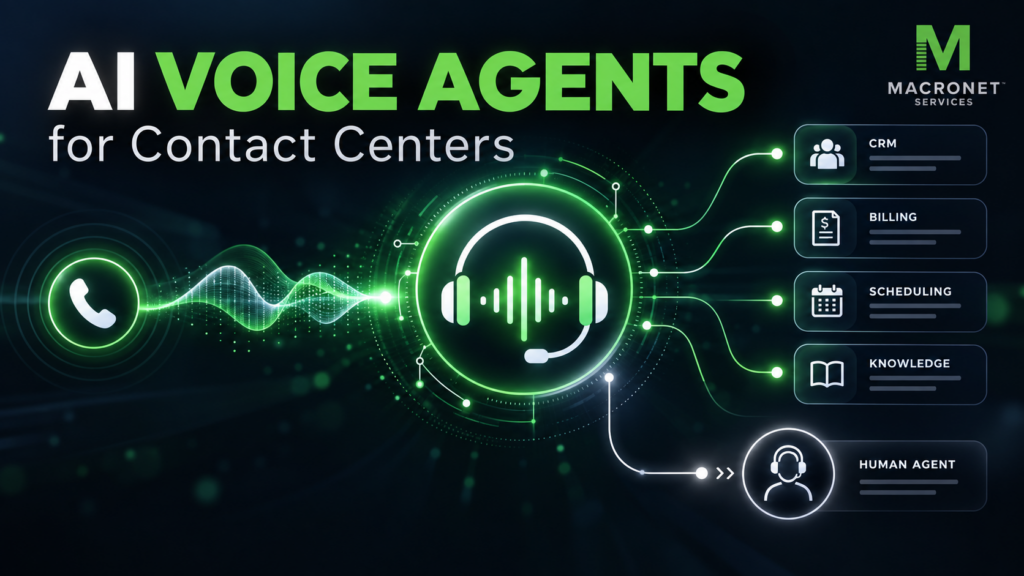
AI Voice Agents for Contact Centers in 2026: Costs, Architecture, Platforms and ROI
AI voice agents are transforming contact centers by combining real-time voice automation, enterprise integrations, AI reasoning, and human escalation. This 2026 guide explains AI voice agent costs, architecture, platforms, SIP and carrier requirements, security, implementation, testing, ROI, and how enterprises can evaluate the right approach for their customer service strategy.