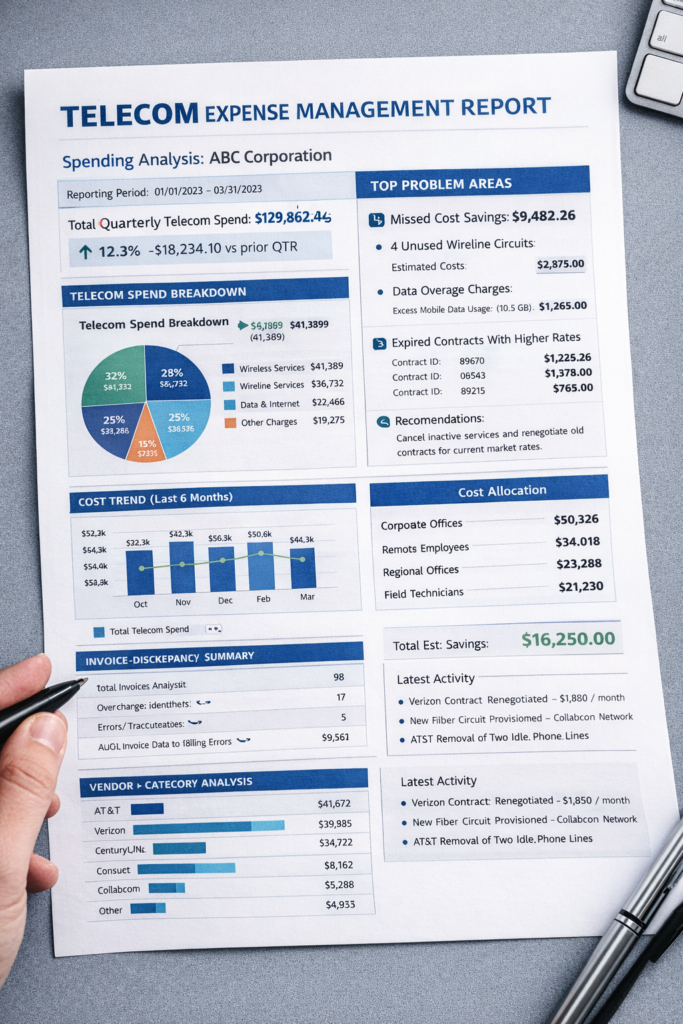
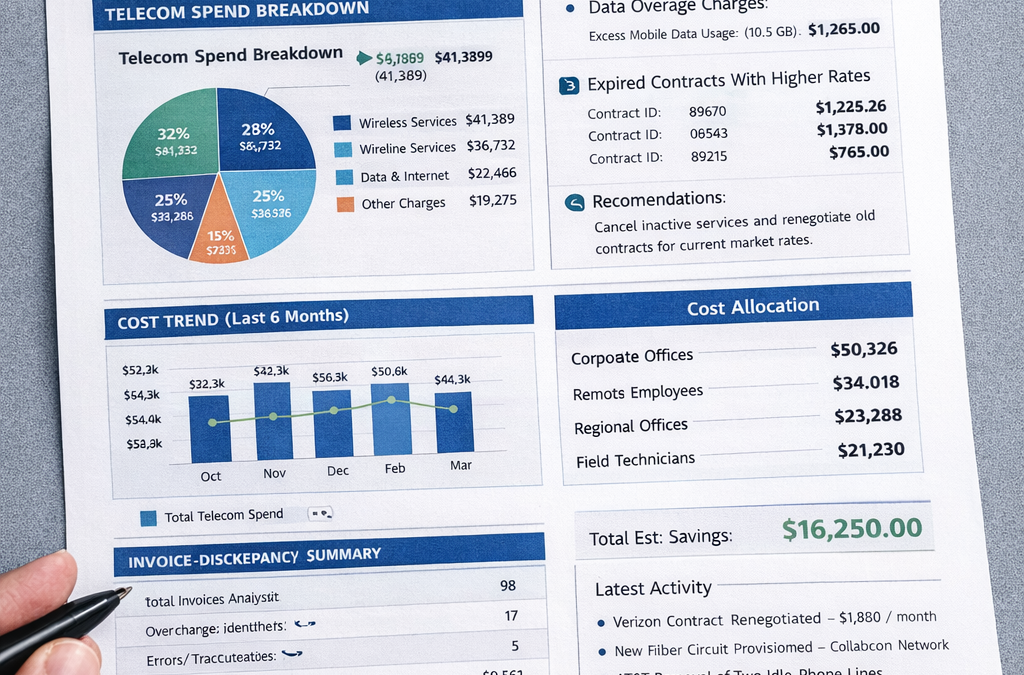
What Is Telecom Expense Management (TEM)? A Guide to Controlling Enterprise Telecom Costs in 2026
Telecom Expense Management (TEM) refers to the processes, technologies, and services organizations use to monitor, manage, and optimize the costs and assets associated with telecommunications services. Telecom Expenses typically involve Tier-1 ISP Network, Voice, Colocation and Managed Services from global carriers. A comprehensive TEM strategy helps businesses gain visibility into telecom spending across fixed wireline services such as voice, data, and network connectivity. By analyzing usage, invoices, and contracts, Taxes, Telecom Expense Management enables companies to reduce unnecessary costs, eliminate billing errors, and ensure existing communication investments are used as efficiently as possible.
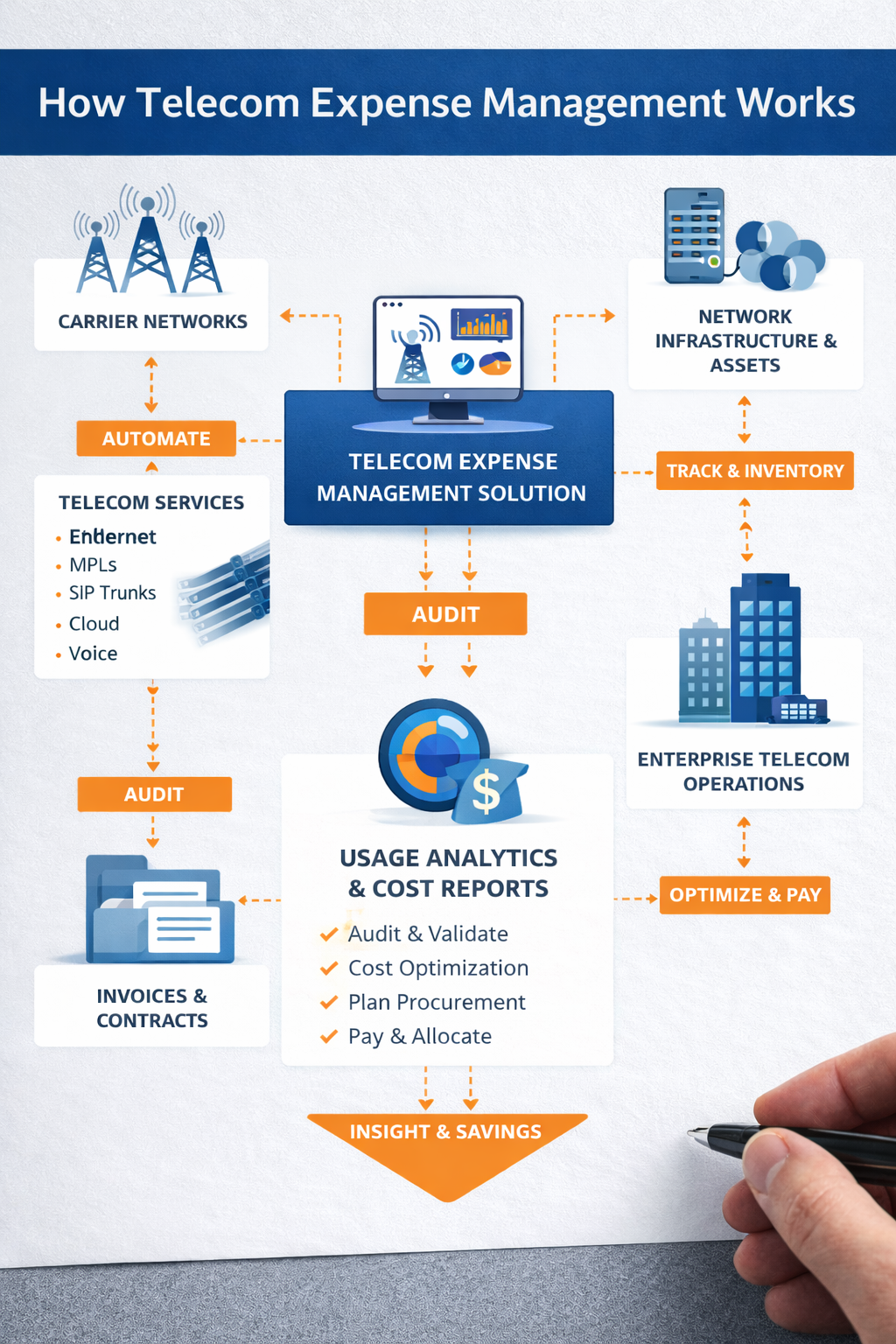
Telecom Expense Management (TEM) solutions provide organizations with centralized visibility and control over their telecommunications services, expenses, and assets through a unified platform. These solutions enable businesses to track telecom invoices, monitor service usage, and manage network inventory across multiple providers and locations. By automating traditionally manual processes—such as invoice auditing, cost allocation, and reporting—TEM platforms help streamline telecom operations, reduce billing errors, and identify cost optimization opportunities. The result is improved operational efficiency, better financial oversight, and greater return on investment from an organization’s communications infrastructure.
Top 5 reasons to implement a Telecom Expense Management Solution for your business
#1 – Cost Allocation Insight:
Most enterprises from the CFO, CIO to Accounts Payable do not have a true understanding of Telecom Costs by location/department/project. By carefully evaluating telecom service plans, Telecom Expense Management Solutions help organizations identify opportunities to eliminate unnecessary spending and optimize their communications investments. A well-structured telecom procurement strategy ensures services are selected and deployed based on actual business requirements, preventing overprovisioning and redundant costs. When combined with regular telecom expense audits, TEM enables companies to align their telecom resources with operational goals while improving cost efficiency and financial accountability across the organization.
#2 – Optimizing Telecom Costs:
By thoroughly analyzing telecom service plans and usage, Telecom Expense Management (TEM) helps organizations identify inefficiencies and reduce unnecessary spending. When supported by a well-defined telecom procurement strategy, businesses can ensure that services and capacity align with actual operational needs rather than excess provisioning. Combined with consistent telecom expense audits, TEM helps organizations allocate telecom resources more effectively while maintaining stronger financial control and cost accountability. Many organizations see upwards of a 30% OPEX reduction in telecom charges when a TEM is implemented. This is a direct result of:
- Missed telecom cancellation requests by the carrier
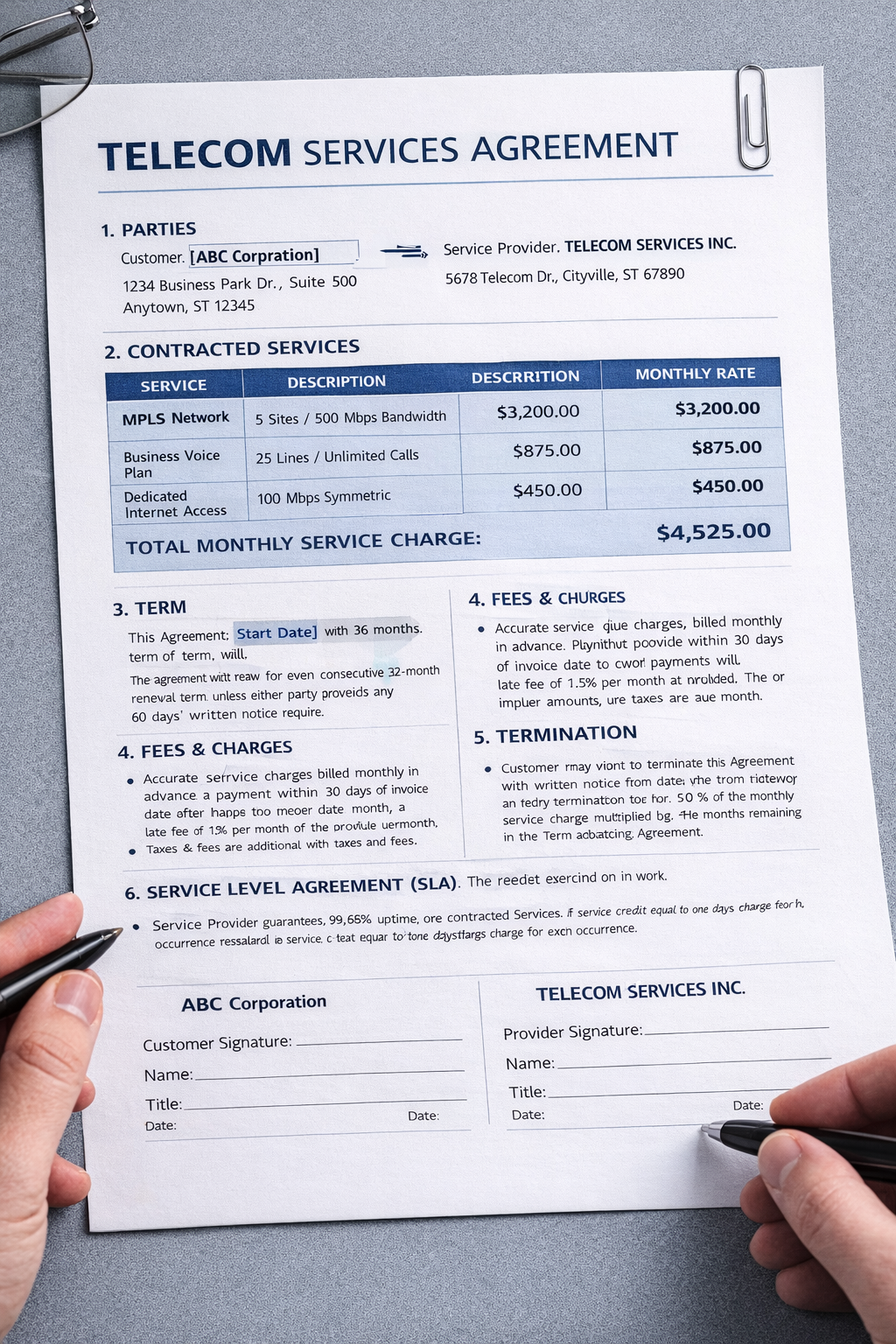
- Auto-Renew Contracts by missing anniversary dates
- Price increases and USF Tax changes
- Retire outdated POTS Lines with a POTS in a Box replacement, usually a 3X savings per telephone number.
#3 – Process Efficiency
By automating the end-to-end telecom expense management lifecycle—from service procurement through invoice processing and payment—TEM solutions help organizations reduce manual effort and administrative overhead. This automation allows teams to focus on higher-value activities while improving operational efficiency. It also minimizes the risk of billing errors and inconsistencies, resulting in faster workflows, greater accuracy, and a more streamlined approach to managing telecom expenses.
#4 – Governance
Navigating the complex regulatory landscape surrounding telecommunications can be challenging for many organizations. Telecom Expense Management (TEM) software helps simplify compliance by tracking regulatory requirements and monitoring telecom activities to ensure they align with applicable rules and standards. By maintaining accurate records and providing oversight across telecom services and billing, TEM solutions help organizations reduce compliance risks and avoid potential legal penalties or financial liabilities. Even Telecom Regulators are embracing deeper industry governance with hopes of AI to the rescue in this legacy arena. Do you know how often the USF tax percentage changes on your telecom bill? Usually quarterly, not annually.
#5 – Technology upgrade – Lowering Costs while improving your Network
Telecom Expense Management (TEM) solution provides organizations with a significant opportunity to reduce telecommunications costs while reinvesting a portion of those savings into modernizing their network and voice infrastructure. As businesses increasingly rely on technologies such as Artificial Intelligence APIs and advanced agent-driven contact centers, bandwidth demands continue to grow. At the same time, telecom pricing has experienced a “race to zero,” with monthly service rates declining substantially over the past several years. Many organizations are taking advantage of these lower costs to expand network capacity, increase bandwidth availability, and support emerging workloads such as deep learning applications, CCaaS (Contact Center as a Service), and UCaaS (Unified Communications as a Service) platforms. This might create an opportunity to redesign the Network for areas such as Cloud On-ramps or Hybrid Cloud to utilize colocation for AI-intensive workloads too costly for hyperscalers’ GPUs.
Telecom Expense Management Industry FAQs.
What is Telecom Expense Management (TEM)?
Telecom Expense Management (TEM) is the practice of tracking, auditing, and optimizing telecommunications costs across an organization. TEM solutions help businesses manage telecom invoices, monitor service usage, track telecom assets, and identify opportunities to reduce unnecessary spending on services such as internet connectivity, voice circuits, and enterprise networking.
Why is Telecom Expense Management important for businesses?
Telecom services often represent a significant operational expense for enterprises. Without proper oversight, organizations may pay for unused services, experience billing errors, or lose visibility into contracts and inventory. TEM helps businesses control costs, improve financial transparency, and ensure telecom services align with operational needs.
What services are typically included in Telecom Expense Management?
TEM typically includes several key functions such as telecom invoice auditing, contract management, inventory tracking, usage analytics, cost optimization, and vendor management. These services help organizations maintain control over telecom infrastructure and spending.
What types of telecom services are managed in TEM programs?
TEM programs commonly manage fixed wireline services such as internet connectivity, MPLS networks, Ethernet services, SIP trunks, voice circuits, and private data networks. Many modern TEM platforms also support mobile services, cloud communications, and unified communications platforms.
How does Telecom Expense Management reduce telecom costs?
TEM reduces telecom costs by identifying billing discrepancies, eliminating unused or underutilized services, optimizing contracts, and ensuring services are provisioned according to business requirements. Organizations often uncover 10–30% cost savings through effective telecom expense analysis and optimization.
What is the difference between Telecom Expense Management (TEM) and Technology Expense Management?
Telecom Expense Management focuses primarily on telecommunications services such as voice, network connectivity, and mobile services. Technology Expense Management expands this scope to include cloud infrastructure, SaaS subscriptions, IT services, and other technology-related expenses across the enterprise.
How do I cut my telecom costs?
The fastest and most effective way to cut telecom costs is to work with an experienced, independent telecom advisory that can evaluate your environment and guide you to the right telecom expense management approach.
Cutting telecom costs requires more than renegotiating rates. It starts with understanding what services you have, what contracts you are bound by, and where waste and inefficiency exist. An experienced advisory firm like Macronet Services helps enterprises identify the most effective telecom expense management, FinOps, and optimization solutions for their specific business, without vendor bias. Executives can contact Macronet Services at any time for a free consultation to quickly assess savings opportunities and next steps.
Is the Telecom Expense Management Solution industry crowded with solutions in the Market?
No. In fact there are only several niche software solutions that truly assist enterprises in the key areas they require for their business. Market Data Forecast has predicted this market to grow by over 12%(CAGR).