
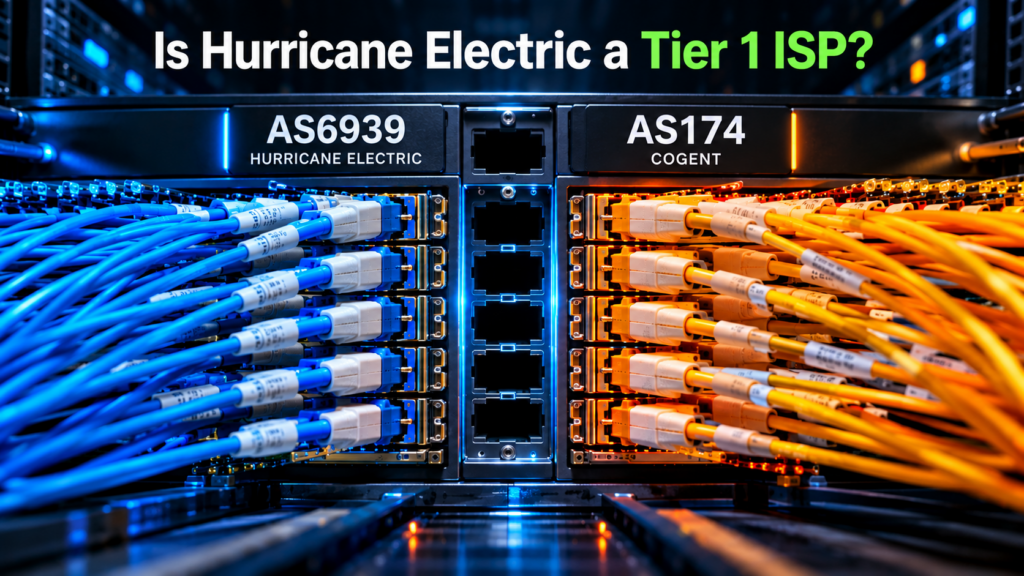
Is Hurricane Electric a Tier 1 ISP? The Real Answer
**Is Hurricane Electric a Tier 1 ISP?** Discover why Hurricane Electric’s Tier 1 classification remains debated, how its global IPv4 and IPv6 networks compare, and what its longstanding peering dispute with Cogent means for Internet connectivity. Explore how Hurricane Electric compares with leading Tier 1 ISPs, including Lumen, Arelion, and NTT, and learn what enterprises should consider when selecting global Internet providers for performance, reliability, and cost.

Starlink Enterprise WAN: How Private Networking, SD-WAN and Satellite Connectivity Work Together
Starlink is transforming enterprise WAN connectivity by enabling businesses to connect remote offices, manufacturing facilities, and distributed locations through satellite networking. This comprehensive guide explains how Starlink integrates with private L2VPN, SD-WAN, MPLS, cloud connectivity, and hybrid WAN architectures. Explore enterprise network design, static public IP addressing, BGP routing, redundancy, security, performance, and pricing. Learn how Macronet Services helps organizations design and source customized Starlink enterprise WAN solutions from multiple qualified integration partners.

Colocation Contract Negotiation: Pricing, SLAs, Escalators and Hidden Costs
Colocation Contract Negotiation: Pricing, SLAs, Escalators and Hidden Costs is a comprehensive enterprise guide to negotiating better data center agreements. Learn how to reduce long-term costs, negotiate power commitments and cross-connect pricing, strengthen SLAs, avoid hidden fees, and secure favorable renewal and termination terms. Discover how strategic negotiations and independent provider sourcing can improve infrastructure reliability, financial predictability, and flexibility.

ISP DDoS Protection: How Upstream DDoS Mitigation and Scrubbing Work
**ISP DDoS Protection: How Upstream DDoS Mitigation and Scrubbing Work** is a comprehensive enterprise guide to defending Internet connectivity against distributed denial-of-service attacks. Discover how ISP DDoS protection, traffic scrubbing centers, BGP diversion, and upstream filtering prevent malicious traffic from overwhelming business networks. Compare always-on versus on-demand mitigation, understand blackholing and FlowSpec, and learn how to evaluate DDoS protection providers, service-level agreements, and costs to improve enterprise network resilience.

ISP Looking Glass Tools: How to Test BGP Routes, Latency and Network Performance
**ISP Looking Glass Tools: How to Test BGP Routes, Latency and Network Performance** is a comprehensive technical guide to evaluating global Internet service providers. Learn how to use public BGP looking glass tools to analyze routing paths, interpret AS_PATH data, run ping and traceroute tests, and measure network latency. Discover how to compare Tier 1 ISPs, identify routing anomalies, troubleshoot connectivity issues, and assess network performance. Macronet Services explains how enterprises can combine real-world routing intelligence with network architecture expertise to make better carrier selection, connectivity, and resiliency decisions.

How to Read an ISP Network Map: POPs, Backbone Routes and Global Coverage
How to Read an ISP Network Map: POPs, Backbone Routes and Global Coverage is a comprehensive guide to understanding carrier network infrastructure and evaluating global Internet connectivity. Learn how to interpret Points of Presence (POPs), fiber backbone routes, submarine cable connections, and network coverage maps. Discover the differences between on-net, near-net, and off-net serviceability, how to assess network redundancy and latency, and what enterprises should verify when comparing global Internet service providers. Macronet Services explains how to turn ISP network maps into informed decisions about carrier selection, connectivity costs, performance, and resilience.

BGP Security: RPKI, Route Leaks and BGP Hijacking Explained
BGP Security: RPKI, Route Leaks and BGP Hijacking Explained examines why Internet routing can be manipulated, how ROAs and route-origin validation work, and what businesses should expect from their ISPs. Explore real incidents, emerging ASPA controls, and a practical BGP security evaluation framework.

What Is an ASN? Autonomous Systems and Internet Routing Explained
What Is an ASN? Autonomous Systems and Internet Routing Explained explores how ASNs identify networks in global Internet routing. Learn how to perform an ASN lookup, understand public and private ASN ranges, evaluate BGP and multihoming requirements, and determine whether your enterprise needs its own autonomous system number.

Carrier Diversity vs Path Diversity: Why Two ISPs May Not Be Redundant
Carrier Diversity vs Path Diversity: Why Two ISPs May Not Be Redundant explores why having two Internet service providers doesn’t always guarantee network redundancy. Discover how shared fiber infrastructure, hidden carrier dependencies, and common points of failure can put enterprise connectivity at risk. Learn how to evaluate physical path diversity, verify independent fiber routes, and select truly resilient Internet connectivity solutions.

IP Transit vs. Dedicated Internet Access (DIA): What’s the Difference?
IP Transit vs. Dedicated Internet Access (DIA): What’s the Difference? This comprehensive enterprise guide explains how IP transit and DIA compare in network architecture, BGP routing, performance, costs, redundancy, and operational responsibilities. Discover when managed Dedicated Internet Access is the better choice, when IP transit offers greater routing flexibility, and how to evaluate Tier 1 ISPs, multihoming, and cloud connectivity. Learn how Macronet Services helps enterprises design resilient networks, compare providers, and optimize Internet connectivity costs.